General Ulysses S. Grant Sideshow 2004
€ 75,00
Worldwide ShippingUitverkocht
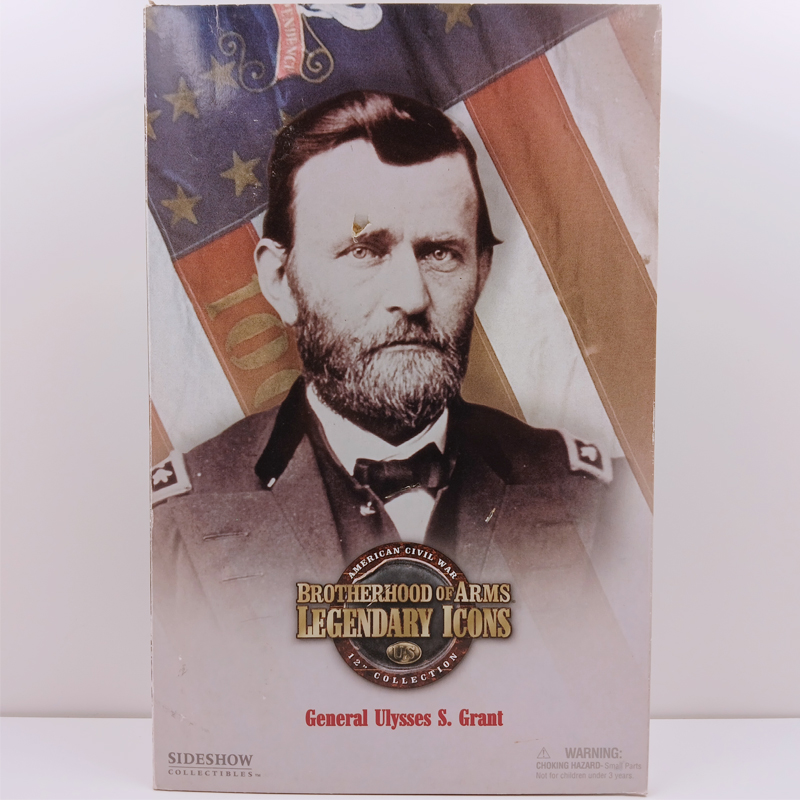
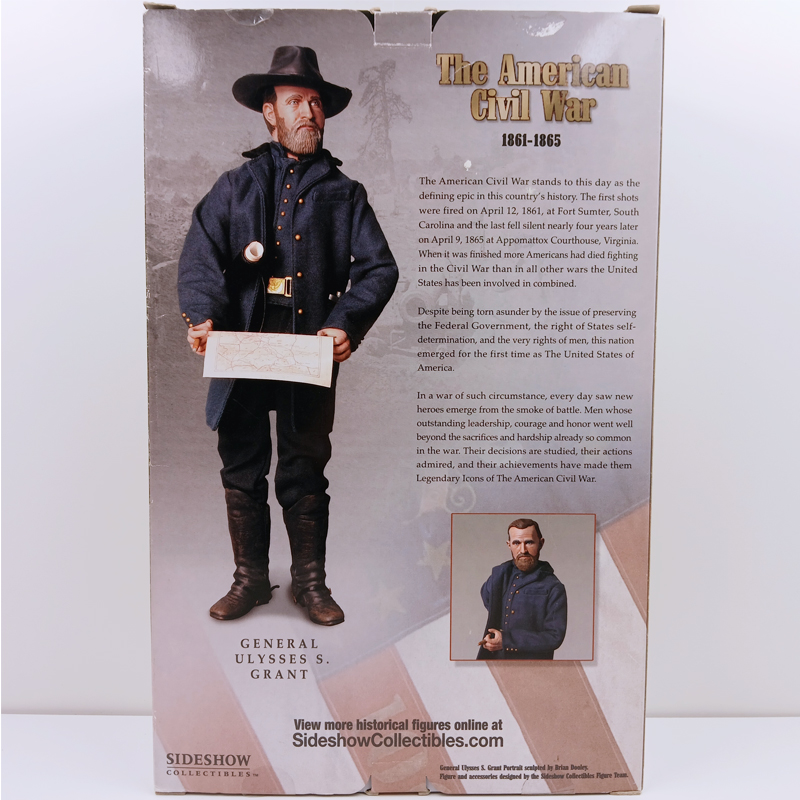
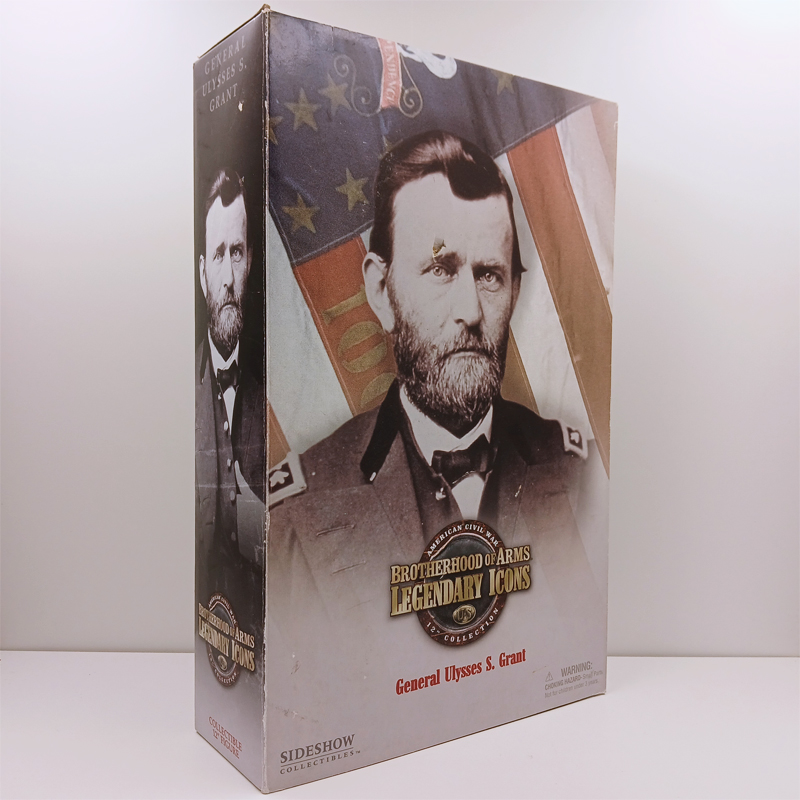
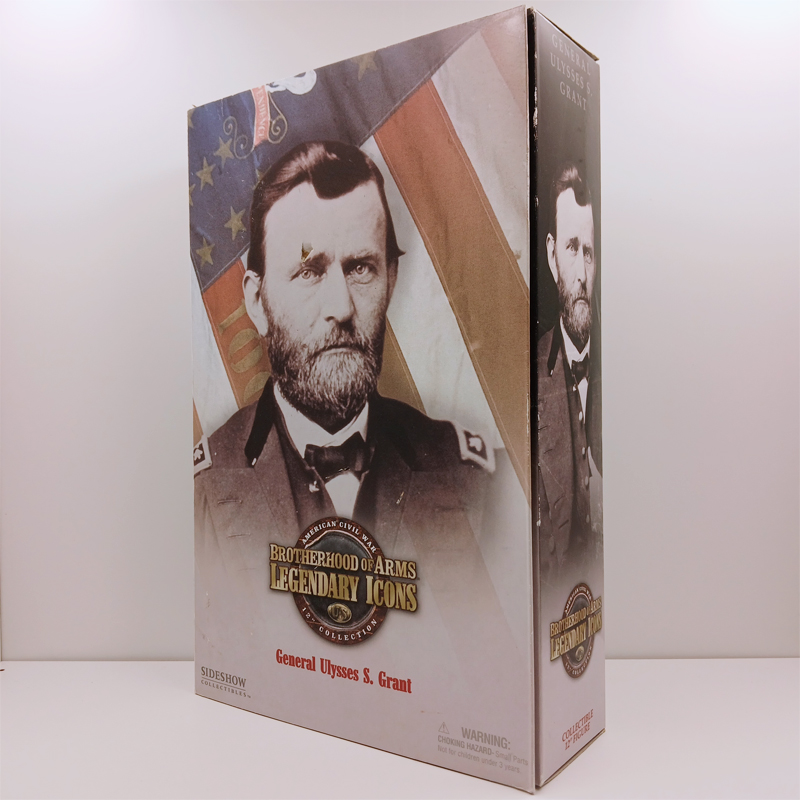
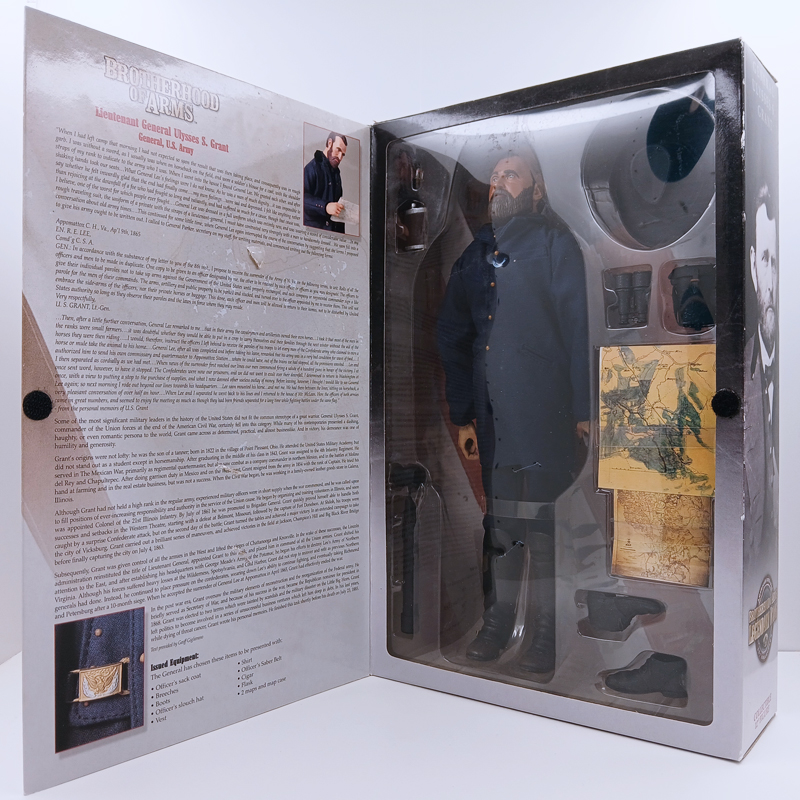
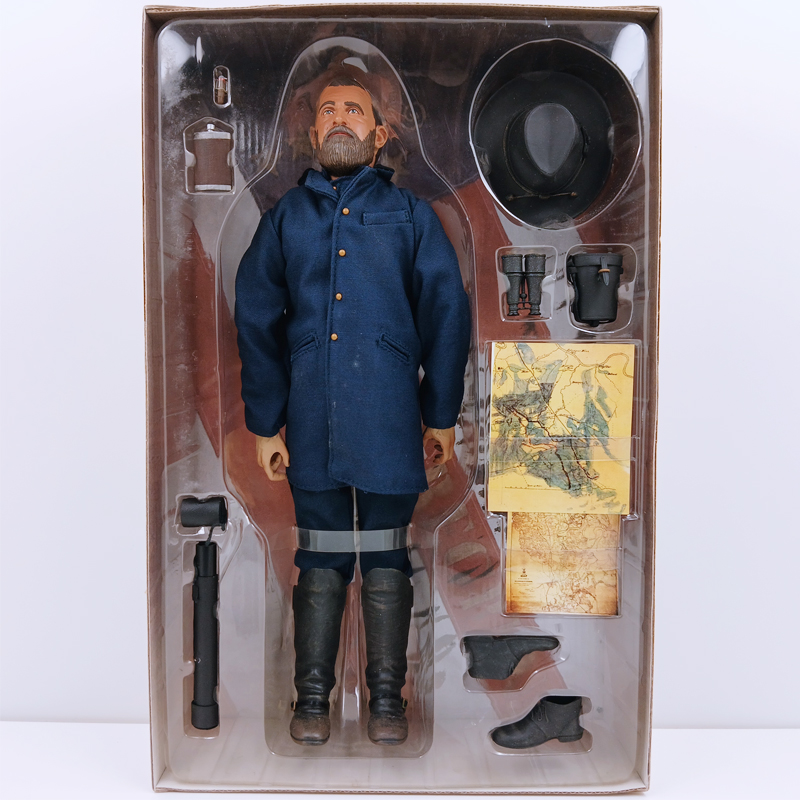
American Civil War General Ulysses S. Grant Brotherhood of Arms Legendary Icons collectible figure by Sideshow Collectibles released in 2004.
The American Civil War stands to this day as the defining epic in this country’s history. The first shots were fired on April 12, 1861, at Fort Sumter, South Carolina and the last fell silent nearly four years later on April 9, 1865 at Appomattox Courthouse, Virginia. When it was finished more Americans had died fighting in the Civil War than in all other wars the United States has been involved in combined.
Despite being torn asunder by the issue of preserving the Federal Government, the right of States self-determination, and the very rights of men, this nation emerged for the first time as The United States of America.
In a war of such circumstance, every day saw new heroes emerge from the smoke of battle. Men whose outstanding leadership, courage and honor went well beyond the sacrifices and hardship already so common in the war. Their decisions are studied, their actions admired, and their achievements have made them Legendary Icons of The American Civil War.
“When I had left camp that morning I had not expected so soon the result that was then taking place, and consequently was in rough garb. I was without a sword, as I usually was when on horseback on the field, and wore a soldier’s blouse for a coat, with the shoulder straps of my rank to indicate to the army who I was. When I went into the house I found General Lee. We greeted each other, and after shaking hands took our seats…What General Lee’s feelings were I do not know. As he was a man of much dignity…it was impossible to say whether he felt inwardly glad that the end had finally come…my own feelings…were sad and depressed. I felt like anything rather than rejoicing at the downfall of a foe who had fought so long and valiantly, and had suffered so much for a cause, though that cause was, I believe, one of the worst for which people ever fought…General Lee was dressed in a full uniform which was entirely new, and was wearing a sword of considerable value…In my rough traveling suit, the uniform of a private with the straps of a lieutenant-general, I must have contrasted very strangely with a man so handsomely dressed…We soon fell into a conversation about old army times…This continued for some little time, when General Lee again interrupted the course of the conversation by suggesting that the terms I proposed to give his army ought to be written out. I called to General Parker, secretary on my staff, for writing materials, and commenced writing out the following terms:
Appomattox C. H., Va., Ap’l 9th, 1865
GEN. R. E. LEE,
Comd’g C. S. A.
GEN.: In accordance with the substance of my letter to you of the 8th inst., I propose to receive the surrender of the Army of N. Va. on the following terms, to wit: Rolls of all the officers and men to be made in duplicate. One copy to be given to an officer designated by me, the other to be retained by such officer or officers as you may designate. The officers to give their individual paroles not to take up arms against the Government of the United States until properly exchanged, and each company or regimental commander sign a like parole for the men of their commands. The arms, artillery and public property to be parked and stacked, and turned over to the officer appointed by me to receive them. This will not embrace the side-arms of the officers, nor their private horses or baggage. This done, each officer and man will be allowed to return to their homes, not to be disturbed by United States authority so long as they observe their paroles and the laws in force where they may reside.
Very respectfully,
U. S. GRANT, Lt.-Gen.
“…Then, after a little further conversation, General Lee remarked to me…that in their army the cavalrymen and artillerists owned their own horses…I took it that most of the men in the ranks were small farmers…it was doubtful whether they would be able to put in a crop to carry themselves and their families through the next winter without the aid of the horses they were then riding…I would, therefore, instruct the officers I left behind to receive the paroles of his troops to let every man of the Confederate army who claimed to own a horse or mule take the animal to his home…General Lee, after all was completed and before taking his leave, remarked that his army was in a very bad condition for want of food…I authorized him to send his own commissary and quartermaster to Appomattox Station…where he could have, out of the trains we had stopped, all the provisions for want of food…I then separated as cordially as we had met…When news of the surrender first reached our lines our men commenced firing a salute of a hundred guns in honor of the victory. I at once sent word, however, to have it stopped. The Confederates were now our prisoners, and we did not want to exult over their downfall. I determined to return to Washington at once, with a view to putting a stop to the purchase of supplies, and what I now deemed other useless outlay of money. Before leaving, however, I thought I would like to see General Lee again; so next morning I rode out beyond our lines towards his headquarters…Lee soon mounted his horse…and met me. We had there between the lines, sitting on horseback, a very pleasant conversation of over half an hour…When Lee and I separated he went back to his lines and I returned to the house of Mr. McLean. Here the officers of both armies came in great numbers, and seemed to enjoy the meeting as much as though they had been friends separated for a long time while fighting battles under the same flag.”
-from the personal memoirs of U.S. Grant
Some of the most significant military leaders in the history of the United States did not fit the common stereotype of a great warrior. General Ulysses S. Grant, commander of the Union forces at the end of the American Civil War, certainly fell into this category. While many of his contemporaries presented a dashing, haughty, or even romantic persona to the world, Grant came across as determined, practical, and almost businesslike. And in victory, his demeanor was one of humility and generosity.
Grant’s origins were not lofty: he was the son of a tanner; born in 1822 in the village of Point Pleasant, Ohio. He attended the United States Military Academy, but did not stand out as a student except in horsemanship. After graduating in the middle of his class in 1843, Grant was assigned to the 4th Infantry Regiment. He served in The Mexican War, primarily in regimental quartermaster, but also saw combat as a company commander in northern Mexico, and in the battles at Molino del Rey and Chapultepec. After doing garrison duty in Mexico and on the West coast, Grant resigned from the army in 1854 with the rank of Captain. He tried his hand at farming and in the real estate business, but was not a success. When the Civil War began, he was working in a family-owned leather goods store in Galena, Illinois.
Although Grant had not held a high rank in the regular army, experienced military officers were in short supply when the war commenced, and he was called upon to fill positions of ever-increasing responsibility and authority in the service of the Union cause. He began by organizing and training volunteers in Illinois, and soon was appointed Colonel of the 21st Illinois Infantry. By July of 1861 he was promoted to Brigadier General. Grant quickly proved himself able to handle both successes and setbacks in the Western Theatre, starting with a defeat at Belmont, Missouri, followed by the capture of Fort Donelson. At Shiloh, his troops were caught by a surprise Confederate attack, but on the second day of the battle, Grant turned the tables and achieved a major victory. In an extended campaign to take the city of Vicksburg, Grant carried out a brilliant series of maneuvers, and achieved victories in the field at Jackson, Champion’s Hill and Big Black River Bridge before finally capturing the city on July 4, 1863.
Subsequently, Grant was given control of all the armies in the West and lifted the sieges of Chattanooga and Knoxville. In the wake of these successes, the Lincoln administration reinstituted the title of Lieutenant General, appointed Grant to this rank, and placed him in command of all the Union armies. Grant shifted his attention to the East, and after establishing his headquarters with George Meade’s Army of the Potomac, he began his efforts to destroy Lee’s Army of Northern Virginia. Although his forces suffered heavy losses at the Wilderness, Spotsylvania, and Cold Harbor, Grant did not stop to recover and refit as previous Northern generals had done. Instead, he continued to place pressure on the Confederates, wearing down Lee’s ability to continue fighting, and eventually taking Richmond and Petersburg after a 10-month siege. When he accepted the surrender of General Lee at Appomattox in April 1865, Grant had effectively ended the war.
In the post war era, Grant oversaw the military elements of reconstruction and the reorganization of the Federal army. He briefly served as Secretary of War, and because of his success in the war, became the Republican nominee for president in 1868. Grant was elected to two terms which were tainted by scandals and the military disaster on the Little Big Horn. Grant left politics to become involved in a series of unsuccessful business ventures which left him deep in debt. In his last years, while dying of throat cancer, Grant wrote his personal memoirs. He finished this task shortly before his death on July 23, 1885.
Issued equipment
- Officer’s sack coat
- Breeches
- Boots
- Officer’s slouch hat
- Vest
- Shirt
- Officer’s Saber Belt
- Cigar
- Flask
- 2 maps and map case
| Condition | Good |
|---|---|
| Size | 32 centimeters |
| Packaging | Box |
| Release | 2004 |
| Origin | United States |
| Production | China |